03Creativity and ProductionEditorial essay
From Heritage to Production
Cultural inheritance can inform contemporary work when its underlying knowledge is understood and put to use. This requires more than preserving objects or repeating familiar forms. It requires opportunities to experiment, make, commission and build.
- Byline
- Syrian Society Foundation — Editorial
- Reading time
- 3 min read
An editorial working perspective from the initiative. It is not a summary of completed research.
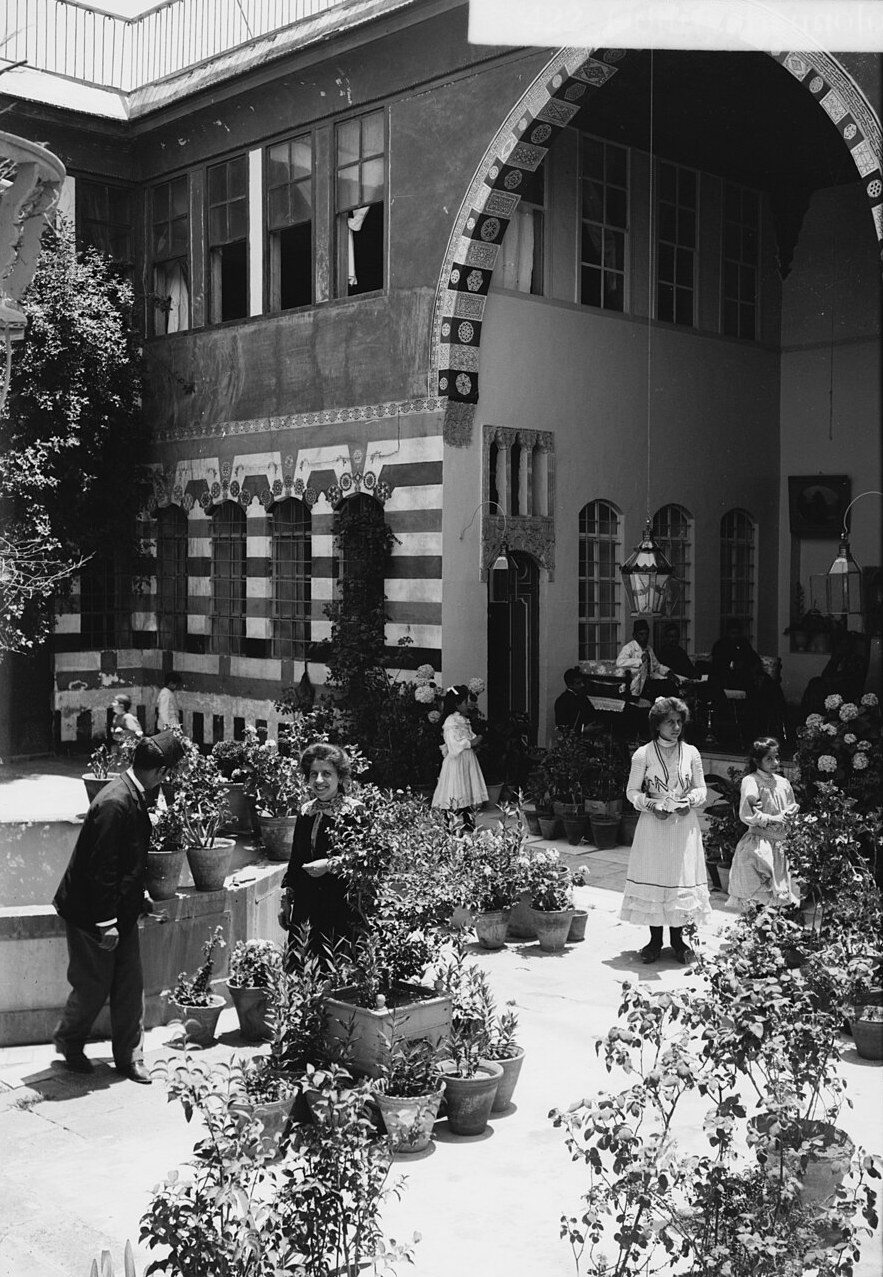
Heritage is usually discussed as something to protect. Museums, archives, restoration projects and documentation efforts do essential work, especially where so much has been damaged or dispersed. Yet protection alone describes a relationship with the past in which the main activity is looking after. It leaves less room for a second relationship, in which inherited knowledge becomes a resource for making something new.
Knowledge beneath the surface
Every craft or building tradition contains decisions that were once practical: why a wall is thick, why a courtyard is oriented a certain way, why a textile uses a particular weave, why a dish is prepared in stages. These decisions encode knowledge about climate, materials, durability, social life and economy.
Contemporary work that reproduces only the surface of these traditions keeps the appearance and loses the reasoning. Work that understands the reasoning may produce something that looks quite different but carries the knowledge forward. The following are illustrative examples of the distinction, not documented cases:
- A designer studying how courtyard houses manage heat might apply those principles to a modern apartment block without any decorative reference to the past.
- A furniture maker might use inherited joinery logic with new materials, keeping the repairability that made older pieces last.
- A visual identity might draw on the proportions and rhythm of Arabic script rather than placing calligraphy on a logo as ornament.
The conditions for translation
Moving from heritage to production is not mainly an aesthetic problem. It depends on conditions that are often missing:
- Access to people who still hold practical knowledge, and fair recognition of their contribution.
- Time and money to experiment, including the freedom to fail.
- Clients and institutions willing to commission work that is neither a replica nor an import.
- Education that connects technical skill with cultural and historical understanding.
Where these conditions are absent, two outcomes are common. Heritage becomes a souvenir economy that sells simplified versions of itself, or it is left to specialists while everyday production follows imported templates.
Respect without reverence
Using heritage productively also means accepting that some inherited forms will change beyond recognition, and that some will disappear. This can be uncomfortable. But a tradition that cannot be altered is already, in an important sense, no longer living.
There are also ethical questions. Who benefits when traditional knowledge becomes a commercial product? Are the communities and individuals who developed it acknowledged and rewarded? These questions should be asked early, not after a product succeeds.
Who owns inherited knowledge?
Translating heritage into contemporary products raises a question that is often skipped: who benefits? Knowledge held by families of craftspeople, by rural communities or by particular neighbourhoods can be documented, branded and sold by others. Sometimes this keeps a practice alive; sometimes it extracts its value and leaves its holders where they were.
We do not think there is a simple rule. A working proposition: translation is more defensible when the people whose knowledge it draws on are credited, consulted and, where there is income, share in it. That is easier to state than to practise, and it deserves concrete experiments.
Between the museum and the market
Two institutions tend to claim heritage: the museum, which protects it from change, and the market, which changes it into what sells. Both have their uses and both have costs. The workshop, the school and the household sit between them: places where knowledge is still practised, corrected and passed on. Much of what is valuable about inherited knowledge may survive only there, which means that supporting those settings may matter more than any single product.
Limits of this argument
The distinction between reasoning and appearance is useful but not absolute. Appearance carries meaning too, and people may legitimately want familiar forms around them. The essay's examples are general and not drawn from documented projects.
What we want to learn
We are interested in practical examples: workshops, studios, businesses and institutions that have moved from documentation to production, and what made that possible. We are equally interested in attempts that did not work. Both kinds of evidence would help clarify what heritage can contribute to contemporary Syrian life, and on what terms.
Tags: heritage, craft, design