05Culture and ModernityEditorial essay
The Productive Tension Between Local and Global
Cultural confidence does not depend on isolation. It depends on the ability to encounter other ideas without losing the capacity to judge them critically, adapt them intelligently and create something that responds to one’s own circumstances.
- Byline
- Syrian Society Foundation — Editorial
- Reading time
- 3 min read
An editorial working perspective from the initiative. It is not a summary of completed research.
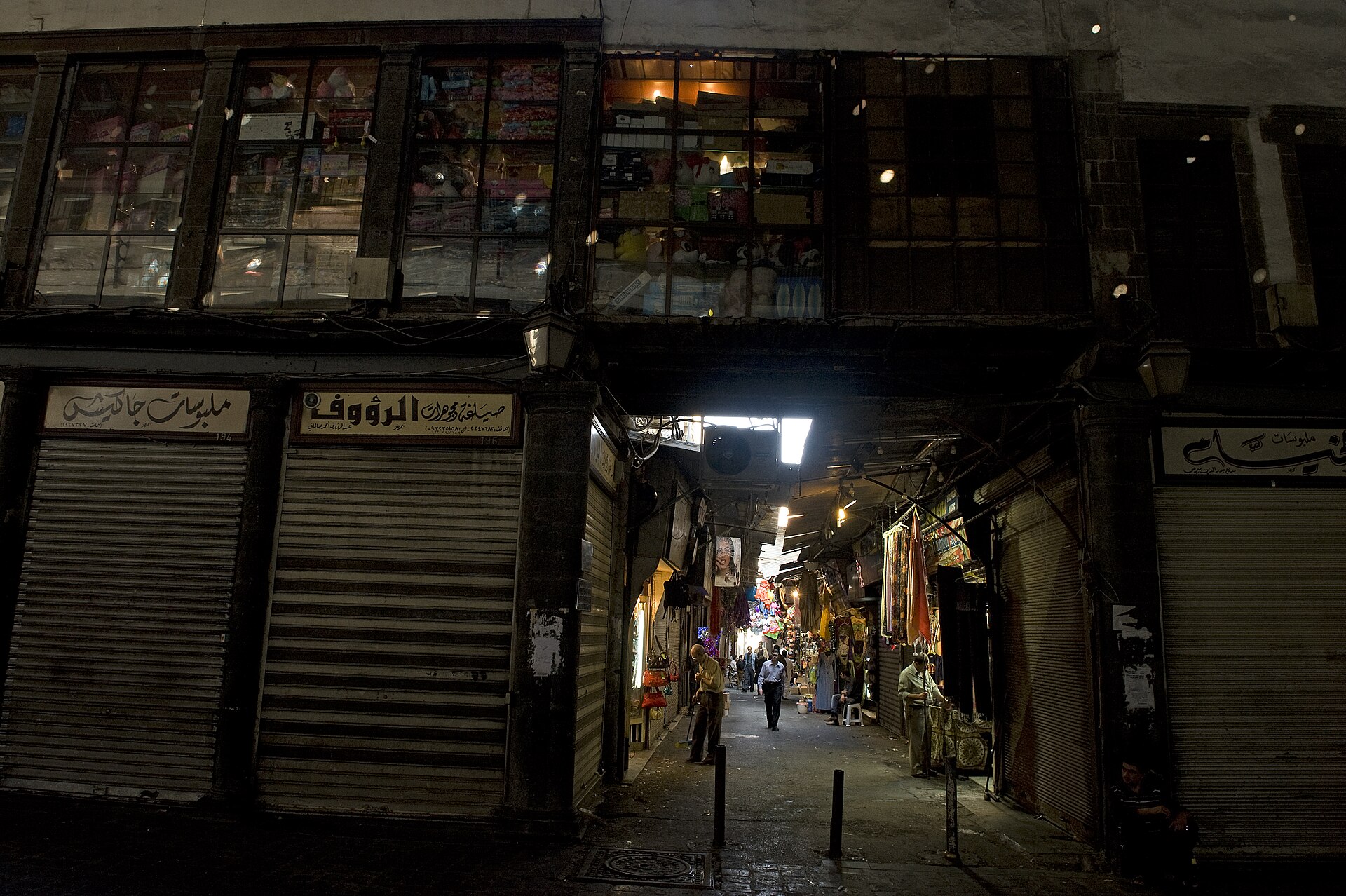
Debates about the local and the global are often staged as a contest. On one side, a fear that openness will dissolve what is distinctive. On the other, an impatience with anything that seems to slow down integration with the wider world. Both positions treat culture as a fixed quantity that can only be defended or traded away.
A long history of exchange
Syrian cultural life has never been sealed. Trade, pilgrimage, empire, migration, scholarship and media have carried ideas in and out for as long as the region has been inhabited. Much of what is now considered local was once new, and arrived from somewhere else before being made into something particular. This is a general observation about cultural history rather than a claim about any specific practice; tracing particular histories carefully is part of the work ahead.
If exchange is the normal condition, the important question is not whether outside influence should be allowed. It is how a society develops the judgement to use it well.
Two kinds of weakness
A culture can be weak in two different ways. It can be so defensive that it cannot learn, treating every external idea as a threat. Or it can be so uncertain of its own value that it accepts external ideas uncritically, assuming that what comes from elsewhere is more advanced. Both reflect a lack of confidence. Neither produces original work.
Confidence, in this sense, is a capacity rather than a feeling. It shows itself in the ability to say: this idea is useful, this part does not fit, and this is what we would make of it here.
The question of contribution
Most discussions of Syria and the world run in one direction: what Syria needs to receive. A second question is just as important. What might Syria contribute to contemporary global culture, rather than merely adopt from it?
Possible answers should be treated as hypotheses. They might include forms of social organisation, ways of living in dense cities, material and food knowledge, approaches to hospitality, literary and musical traditions, or the hard-won experience of people who have rebuilt lives in difficult conditions. Whether and how any of these can become a contribution depends on whether they are developed into contemporary forms, not only described.
The diaspora as a meeting point
Syrians abroad occupy a particular place in this tension. They encounter other societies daily and often translate between them. That position can produce insight. It can also produce distance from conditions inside the country. The most productive exchange is likely to be one in which neither side assumes it sees the whole picture.
Confidence is not certainty
Cultural confidence is sometimes confused with certainty about one's own superiority. That kind of certainty tends to make engagement with outside ideas defensive. Confidence of a more useful kind is the ability to examine an idea from elsewhere without feeling that one's own existence is at stake, and to examine one's own inheritance without feeling that criticism is betrayal. It is a capacity, built through education, institutions and lived experience, not a mood.
Unequal exchange
Exchange between societies is rarely between equals. Language, money, visas, platforms and publishing markets decide whose ideas travel and whose remain local. Syrian writers, designers and researchers often have to translate themselves into frameworks set elsewhere to be heard at all. Acknowledging that inequality is not an argument for isolation; it is a reason to build places, in Arabic and in Syria, where ideas can be developed on their own terms before they meet the world.
Limits of this argument
The essay treats ‘local’ and ‘global’ as if they were clear categories. They are not: much that is called local was once imported, and much that is called global began somewhere specific. The framing is a convenience, and should be held lightly.
Keeping the tension
This essay does not propose a resolution. The tension between local and global is productive precisely because it is not settled. Our interest is in the practices, institutions and individual choices through which people manage it well, and in what can be learned from them.
Tags: globalisation, cultural confidence, diaspora